- Demand is real and datable: ChatGPT reached roughly 700 million weekly users in August 2025,1 Gartner projected a 25% drop in traditional search volume by 2026,2 and the SEO tooling industry has already pivoted to sell AI visibility.4,5
- Scope the offering as a measurement retainer plus fix sprints — and contract on activities and instrumented reporting, never on a promised mention rate. Nobody controls these engines.
- Price with frameworks, not invented benchmarks: measurement has real unit costs that scale with prompts × engines × cadence, and fix sprints price like the content and technical work they are.
- The deliverables clients understand: a baseline report, a prioritized fix queue, and a re-measured delta with confidence intervals — including the honest "no detectable change yet" when that's the truth.
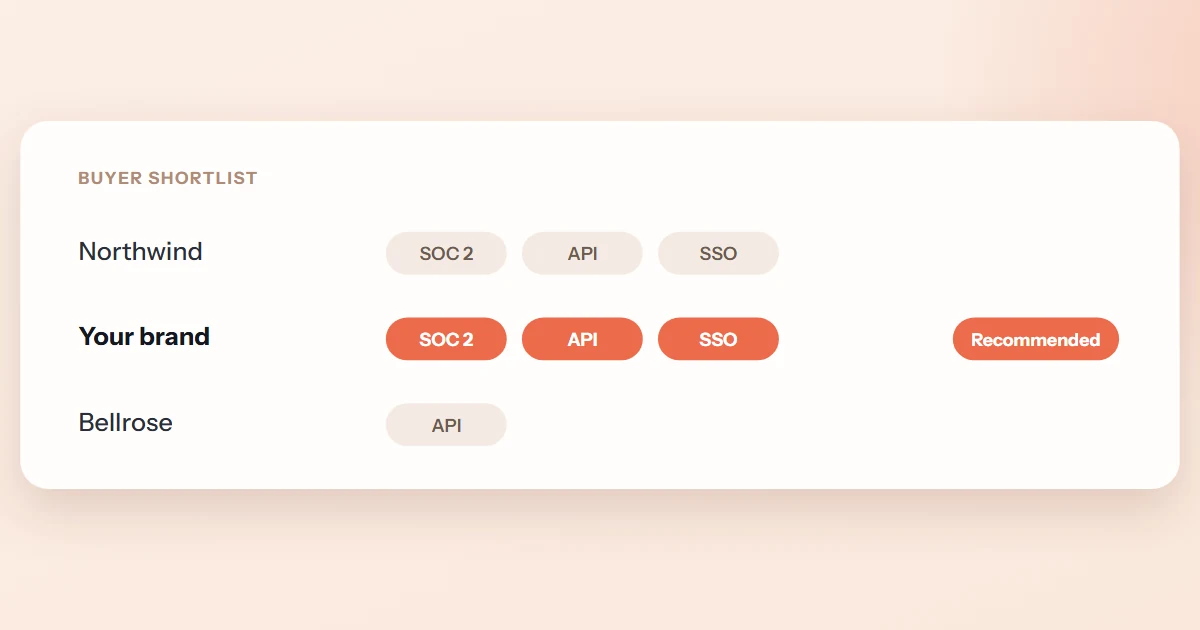
Somewhere in your inbox is a version of this email: "We asked ChatGPT for the best [client's category] and it recommended two competitors. Why aren't we in there? Can you fix it?"
It's a good email to get — it's a client asking you to sell them something. It's also a trap. Answer it with SEO instincts ("we'll get you ranking") and you've promised an outcome nobody can deliver, in a channel you can't fully observe, on a system that changes under your feet. Answer it with the honest structure below and you've added a durable, measurable line of service — one that renews because the reporting is real.
Why clients are asking now
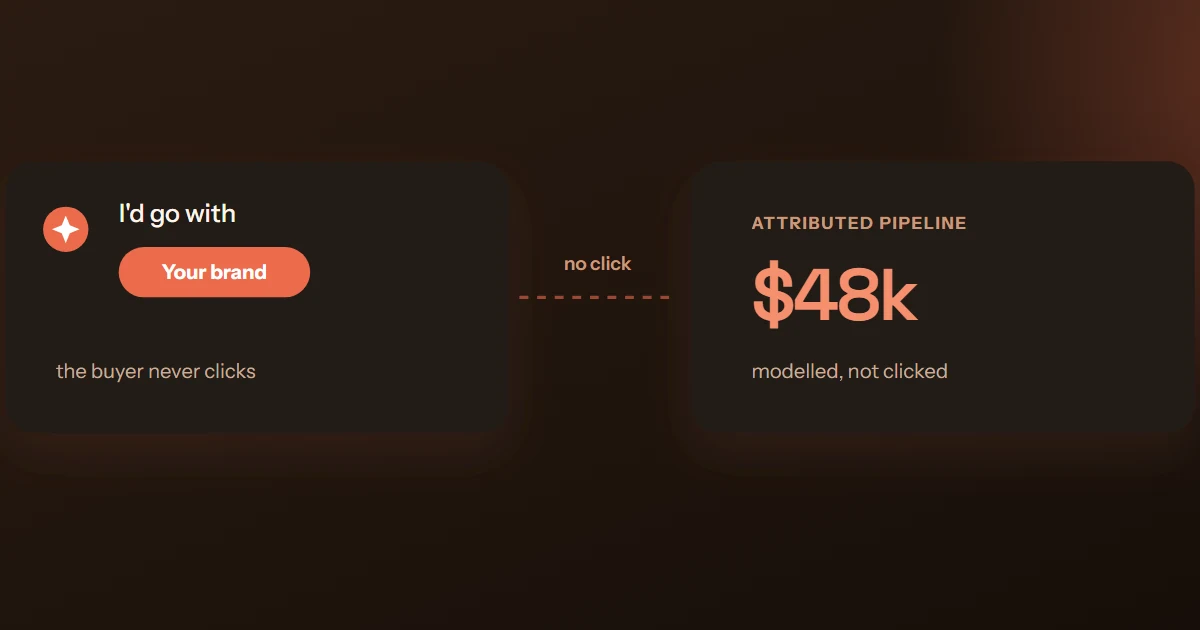
The demand isn't a vibe; it has dates attached. OpenAI said ChatGPT was on pace to reach about 700 million weekly users in August 2025 — quadruple the year before.1 Gartner had already projected traditional search volume falling 25% by 2026 as journeys move into chatbots and agents.2 And where Google shows an AI summary, Pew found users click a traditional result on only about 8% of visits, versus 15% without one3 — the click your client's SEO retainer was built to win is quietly evaporating on exactly the queries that summarize.
The supply side confirms it. Ahrefs shipped Brand Radar — an AI-visibility product inside a flagship SEO toolset — in March 2025,4 and investors put $20M into Profound's Series A that June specifically to chase AI-answer visibility.5 When the picks-and-shovels vendors retool, the gold rush is already underway — and your clients' procurement teams are reading the same coverage you are. The question is whether they buy the service from you or from whoever answers the email first.
Scope it honestly: a measurement retainer plus fix sprints
The offering that holds up — commercially and contractually — has two parts with different rhythms.
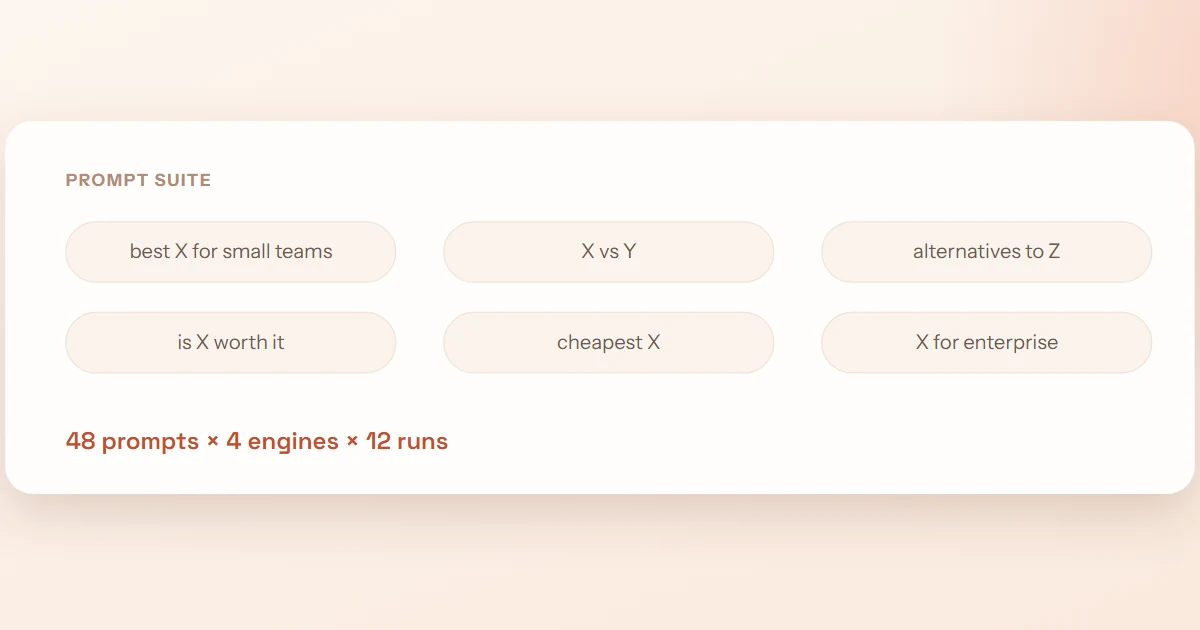
The measurement retainer is the recurring spine: a fixed prompt suite of 20–50 buyer questions per client, run repeatedly across the engines that matter to them, on a steady cadence (fortnightly is a sensible default — frequent enough to catch moves, cheap enough to sustain). It produces the numbers everything else hangs off: mention rate, recommendation rate, share of voice, sentiment and accuracy, each with confidence intervals. The suite is the instrument — resist "improving" it monthly, because every change breaks the client's trend line.
Fix sprints are scoped bursts of the work the measurement points at: rewriting money pages to be quotable and evidence-rich (the tactics with actual research behind them — citations, quotations, statistics6), building comparison pages for the "vs" prompts the client is losing, repairing crawler access and schema, and earning corroboration on the sources the answers already cite. Sell them quarterly, prioritized by the gap queue, sized like the content and technical projects they are. For B2B and SaaS clients — where thin source material makes answers most movable — the B2B playbook is the scoping template.
Now the hard line, and it belongs in the SOW: never promise a mention rate, a ranking, or a specific lift. You don't control ChatGPT, Google or Perplexity, and a guaranteed outcome on a system you don't control is a breach waiting for a renewal date. Contract on what you do control: the suite, the cadence, the sprint deliverables, and the reporting. Spell it out — "we commit to the activities and the instrumented measurement of their effect; we do not control the engines and do not guarantee specific answer outcomes." Clients respect it, and it protects you on the quarter when the numbers wobble for reasons that aren't yours.
Why honesty wins the pitch: your prospect has already seen vendors promising "#1 in ChatGPT, guaranteed". One sharp question — "how, exactly, when you don't control the model?" — and those decks collapse. Being the agency that explains stochastic answers and shows confidence intervals is a positioning move, not just an ethics one.
How to price it — frameworks, not benchmarks
We won't invent a "market rate" for you; anyone quoting one is guessing. What we can give you is the cost structure, because pricing above known costs is framework one.
1. Cost-plus on measurement. Measurement has real, per-run unit costs that vary sharply by engine — on our own pricing page, a single check (one prompt, one engine, once) runs from 11 credits on the cheapest engine to 172 on the most expensive, because that's what the engines cost to query. Whatever tooling you use, your retainer floor is: (prompts × engines × repetitions × cadence) at real cost, plus your analysis time. Price the retainer comfortably above that floor and it never becomes a loss leader.
2. Value-scoped tiers. The same machinery costs very different amounts at different scopes, so let scope tier the price: a starter tier (one brand, 2–3 engines, fortnightly), a standard tier (more engines, competitor tracking), and an intensive tier (full engine coverage plus quarterly sprints). Three multipliers — prompts, engines, cadence — give you a defensible reason every tier costs what it costs.
3. Anchor to the stake, not the hours. For a client whose average deal is six figures, presence on the AI shortlist is pipeline insurance; for an ecommerce client it's shelf space. Price conversations that start from what an answer is worth to this client end better than ones that start from your hourly rate.
| Offering | What's in it | What drives your cost |
|---|---|---|
| Baseline audit (one-off) | Prompt suite design, first measured baseline, gap diagnosis, fix queue | Suite size × engines × repetitions; senior analysis time |
| Measurement retainer (monthly) | Scheduled runs on a fixed cadence, delta reporting with CIs, alerting on competitor moves | Cadence and engine coverage — the recurring run cost |
| Fix sprints (quarterly) | Page rewrites, comparison pages, schema and crawler fixes, corroboration outreach | Content and technical production — like any project work |
Run a prospect's site through the free checker before the meeting. "Here's what the engines can and can't use on your pages today" opens more retainers than any slide about the AI revolution.
Run a free client auditThe deliverables clients actually understand
GEO reporting fails when it mimics rank reports. These four artifacts survive contact with a CMO:
- The baseline report. Where the client stands today: mention rate, recommendation rate, share of voice, sentiment and accuracy per engine, each with a 95% confidence interval — plus which competitors own their prompts and which sources the answers cite. This is the "you are here" map, and it's also the sales asset for the rest of the engagement.
- The fix queue. A prioritized, justified list — each item traced to a measured gap ("absent on 7 of 9 comparison prompts → build these two pages"), not a generic best-practices dump. The queue is what the client's team (or your sprint) executes.
- The re-measure delta. Same suite, same method, next period: what moved, what didn't, with intervals so nobody confuses noise for progress. When a change is within the error bars, the report says so. That sentence — "no detectable change yet" — is what makes the client believe the quarter when the number is real.
- The portfolio rollup. For your own ops: every client's trajectory on one screen, so account leads spot the client who's slipping before the client does.
Label the epistemics, too. We tag every number we publish as live, modeled or estimated, and agencies that borrow the discipline find it disarms procurement faster than any case study — because it's the opposite of what clients expect from marketing reporting.
Where MentionBeat's Agency plan fits
You can run all of the above on our infrastructure instead of building it. MentionBeat measures six AI surfaces — ChatGPT, Claude, Gemini, Perplexity, Google AI Overviews and Grok — and no engine is locked to a plan tier: credits are the only limit, and every run is priced before it starts, so a client scope never surprises your margin.
The Agency plan ($599/month) is the multi-client shape of that: one subscription with 80,000 credits a month pooled across your parent workspace and every client sub-workspace — a quiet month for one client funds a heavy one for another — plus up to 250 products, the portfolio view across clients, and white-label reports with your name on them. Unused credits roll over one month; paid yearly, it's ten months' price for twelve. Bill your clients, not your credits.
Start smaller if you're validating the service: the free tier's one-off credit grant is enough to baseline a first client on a lightweight engine and see whether the reporting lands before you commit to a plan.
Frequently asked questions
No — and put that in writing. Nobody controls what ChatGPT or Gemini says, so a guaranteed mention rate is a promise you can't keep and a liability you don't need. Contract on activities and instrumented reporting: the prompt suite, the cadence, the fix work shipped, and deltas measured against a baseline with confidence intervals. Honest scoping is also a differentiator, because some competitor will promise the ranking and eventually get fired for it.
On MentionBeat's Agency plan, yes — white-label reports are one of the three things Agency adds over Scale, alongside up to 250 products and the portfolio view across client sub-workspaces. Your clients see your brand on the report; the measurement machinery underneath stays the same.
It depends on three multipliers you control: prompts in the suite, engines tracked, and cadence. A focused B2B SaaS client might run 25 prompts on two or three engines fortnightly; a competitive consumer brand might need 50 prompts on six engines. Cost scales with those choices — engines are priced differently per check — so scope the suite to the client's actual buying prompts, not to a round number.
The production skills transfer — crawlability, structured data, content quality and digital PR are still the job, as GEO vs. SEO lays out. What's genuinely new is the measurement layer: sampling stochastic answers, computing rates with intervals, and reporting deltas instead of positions. Teams that skip that layer end up selling GEO on vibes — the thing clients are already suspicious of.
Sources & further reading
- CNBC — "OpenAI's ChatGPT to hit 700 million weekly users, up 4x from last year", August 4, 2025.
- Gartner — "Gartner Predicts Search Engine Volume Will Drop 25% by 2026, Due to AI Chatbots and Other Virtual Agents", February 2024.
- Pew Research Center — "Google users are less likely to click on links when an AI summary appears in the results", July 2025.
- Ahrefs — "Brand Radar, Ahrefs certification, and more" (Brand Radar launch), March 2025.
- PR Newswire — "Profound Raises $20M as Brands Race from Blue Links to AI Answers" (Series A led by Kleiner Perkins), June 2025.
- Aggarwal, P., Murahari, V., Rajpurohit, T., Kalyan, A., Narasimhan, K., Deshpande, A. — "GEO: Generative Engine Optimization", KDD 2024 / arXiv:2311.09735.

Growth Lead at MentionBeat. Jack turns visibility data into 90-day execution plans, and has run the diagnose → plan → execute → remeasure loop with teams from industrial manufacturers to developer-tools startups.