- Built-in knowledge moves in jumps, not in real time. Per OpenAI's model docs (August 2026): the current GPT-5.6 family's training cutoff is February 16, 2026; GPT-5.5's was December 1, 2025; GPT-5's was September 30, 2024.123
- Cutoffs lag releases by months. GPT-5 shipped August 7, 2025 with a September 2024 cutoff — about ten months of world the model never saw.34
- The search layer is fresh at answer time. Since ChatGPT search launched (October 2024), browsed answers pull from a live web index — a new page can be cited within days of being indexed.56
- For your brand: new content can enter browsed answers fast, but the model's remembered associations only move on retraining — and every model release reshuffles answers, which is why measurement is continuous, not one-off.
"How often does ChatGPT update its data?" is really three questions wearing one coat: how current is the model itself, how current is what it looks up, and does talking to it change what it knows. People blur them constantly — which is how you get one colleague insisting ChatGPT "knows about yesterday's launch" and another insisting it's "stuck in the past," both holding screenshots, both right.
Here are the three layers, with the current dates — and a two-minute test to tell which layer produced any answer you're looking at.
Layer 1: training data — frozen until a new model ships
Every ChatGPT model has a knowledge cutoff: the date its training data ends. Everything the model "just knows" — including what it believes about your brand, your products and your competitors — comes from before that date. The cutoff never creeps forward; it jumps when OpenAI ships a new model. As of August 2026, OpenAI's model documentation lists:1
| Model generation | Knowledge cutoff | Status (Aug 2026) |
|---|---|---|
| GPT-5.6 (Sol, Terra, Luna) | February 16, 20261 | Current flagship family |
| GPT-5.5 | December 1, 20252 | Previous generation (shipped spring 2026) |
| GPT-5 | September 30, 20243 | Released August 7, 2025;4 now superseded |
Two things to read out of that table. First, the gap: GPT-5 launched roughly ten months after its own cutoff. Even today's flagship is answering from a snapshot about six months old. Anything you published after February 2026 does not exist in the current models' memory — no matter how important it is to you.
Second, the jump: when a new model becomes the default, everyone's answers move to a new snapshot on the same day. Associations the old model had — including wrong or stale ones about your brand — can strengthen, weaken or vanish overnight. If you track what assistants say about you, model release day is when your numbers are most likely to lurch. (That lurching is measurable — more below.)
Layer 2: web search — fresh at answer time
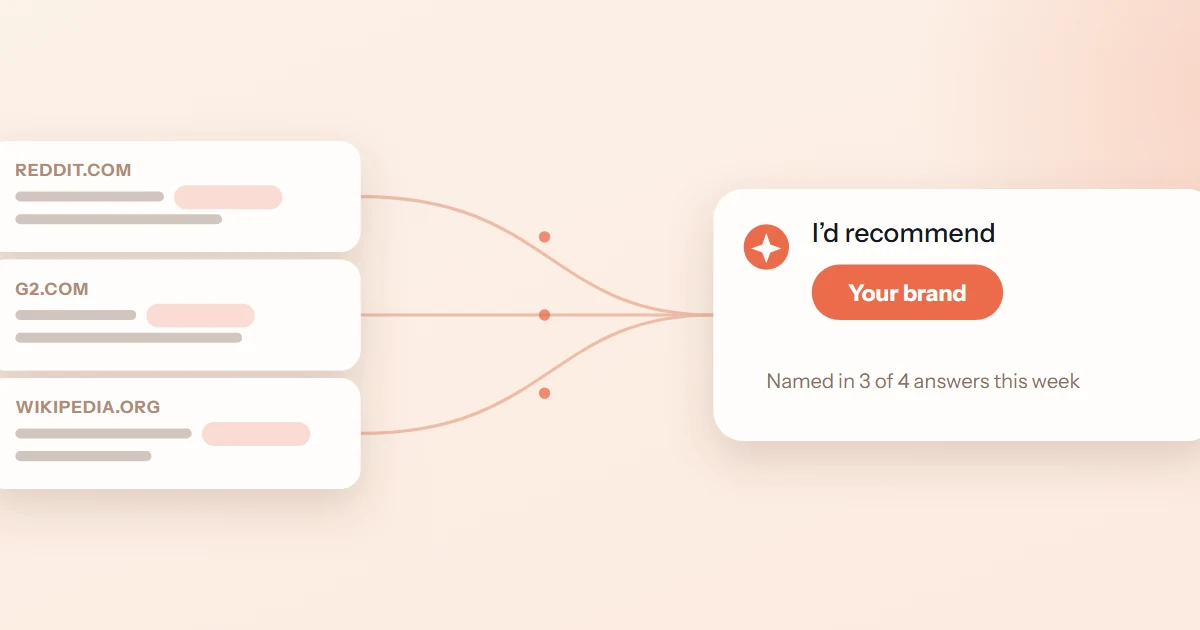
The training cutoff would be the whole story if ChatGPT only answered from memory. It doesn't. Since OpenAI launched ChatGPT search in October 2024, questions that benefit from current information trigger a live web search: the model queries an index, fetches pages, and synthesizes an answer with citations.5
That index is fed by OAI-SearchBot, OpenAI's dedicated search crawler, and page visits during answers come from ChatGPT-User — both documented, both controllable in your robots.txt.6 The practical property that matters: this layer has no cutoff. It's as fresh as the index, which for actively crawled sites means days — sometimes hours.
So the same product question can produce two very different answers. Without search, you get the model's February-2026 memory. With search, you get a synthesis of what's on the web today — including a page you published on Tuesday. Commercial and comparison questions trigger search often, which is genuinely good news if you're the challenger: the fast layer is the one you can influence this quarter. How the shortlist itself gets assembled — memory, retrieval, consensus, randomness — is the subject of how ChatGPT decides which brands to recommend.
Layer 3: your chats — the layer people overestimate
One persistent misconception: that correcting ChatGPT teaches it. Tell it your new pricing, and it "knows" — right? Only for you. Chat history and memory features personalize your sessions. Depending on your data settings, conversations may also feed future training runs — but nothing you type updates the global model that answers everyone else today.
The implication for brands is blunt: you can't correct ChatGPT by arguing with it. To change what it tells other people, you publish — content the search layer can retrieve this week, and the next training run can absorb next cycle.
Which layer answered you? A two-minute diagnostic
Any time an answer surprises you — it names you, it snubs you, it gets your pricing wrong — identify the layer before reacting, because the fix differs. The tells:
| Check | Points to retrieval | Points to the model's memory |
|---|---|---|
| Citations & links | Sources cited, links in the answer | No citations, unhedged prose |
| The activity indicator | A "searching the web" step appeared | Answer streamed immediately |
| Post-cutoff facts | Knows things from after Feb 2026 | Hedges, or answers from an older world |
| Forcing the layer | "Search the web for the current answer" — fresh version | "Answer from memory only, don't search" — the parametric version |
The forcing trick is the useful one. Run the same buyer question both ways and you're looking at your brand in each layer separately: memory tells you what the training corpus taught the model about you; the searched run tells you whether your current pages are winning retrieval. The two often disagree — a brand can dominate memory but lose every browsed answer to a rival's fresher comparison page, or the reverse.
One caution before you conclude anything from a single run: answers are stochastic. The same prompt, same layer, can name different brands run to run. One screenshot is an anecdote; a rate across repeated runs is a measurement.
MentionBeat runs your buyer prompts across ChatGPT, Claude, Gemini and Perplexity on a fixed cadence, so you see mention rates with confidence intervals — and catch the lurch when a model release rewrites the answers.
Get a free visibility reportWhat the two clocks mean for your brand
Practically, the update schedule sorts your GEO work into a fast loop and a slow loop:
- Publish for the fast loop. A new comparison page, spec sheet or answer-first guide can enter browsed answers within days of being indexed. If you're invisible today, retrieval is where visibility starts moving first.
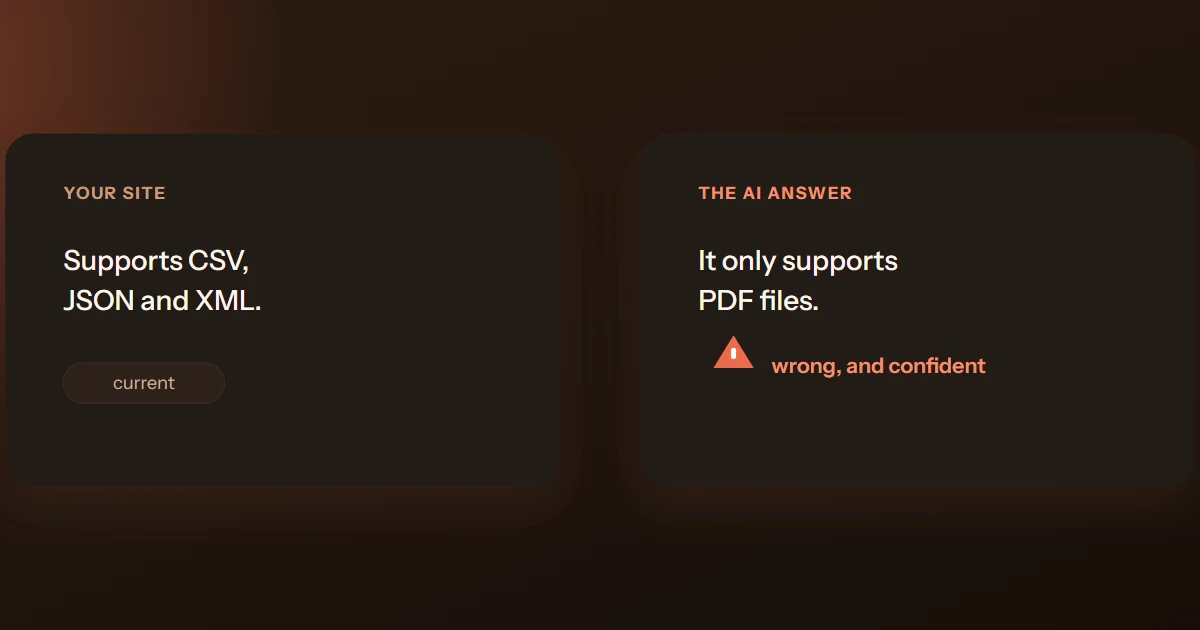
- Fix stale facts at the retrievable source. When ChatGPT quotes an old price, the browsed layer corrects as soon as fresher, consistent pages win retrieval. The memorized version persists until a future model trains past it — detecting and fixing what AI gets wrong about you covers the full playbook.
- Expect the lurch at every release. Model updates move everyone's answers at once, in ways nobody outside OpenAI can predict. A mention rate that held for months can step up or down in a week — which is why we publish Engine Weather, our ongoing report of how consistent each engine's answers actually are.
- Don't stop at ChatGPT. Gemini, Claude, Perplexity and Google's AI Mode each run their own two clocks, with different cutoffs and different retrieval — Gemini and AI Mode have a playbook of their own. A brand can be fresh in one engine and eighteen months stale in another, simultaneously.
The mental model to keep: ChatGPT doesn't update its data on a schedule you can look up — it updates one layer continuously and the other in unannounced jumps. The only way to know where you stand across both is to keep asking, on a cadence, and treat the answers as data.
Frequently asked questions
Only one layer does. The model's built-in knowledge is frozen at its training cutoff — February 16, 2026 for the current GPT-5.6 family1 — and moves only when OpenAI ships a new model. When a question triggers web search, though, ChatGPT reads pages at answer time, so that layer is as fresh as the search index.
Not the way people hope. Your chats personalize your own sessions and, depending on settings, may feed future training data — but they don't update the global model that answers everyone else. To change what ChatGPT tells other people, publish retrievable content and earn consistent third-party descriptions the next training run can absorb.
Through the search layer: days to weeks — once OAI-SearchBot has crawled and indexed the page, browsed answers can cite it.6 Through the model itself: months, because the page has to make it into the training data of a model that hasn't shipped yet. Publish for the fast loop; be patient with the slow one — and measure both instead of assuming.
Sources & further reading
- OpenAI — Models documentation: GPT-5.6 family (Sol, Terra, Luna), knowledge cutoff Feb 16, 2026. Accessed August 8, 2026.
- OpenAI — GPT-5.5 model page: knowledge cutoff Dec 1, 2025. Accessed August 8, 2026.
- OpenAI — GPT-5 model page: knowledge cutoff Sep 30, 2024. Accessed August 8, 2026.
- OpenAI — "Introducing GPT-5 for developers", August 7, 2025.
- OpenAI — "Introducing ChatGPT search", October 31, 2024.
- OpenAI — "Overview of OpenAI crawlers" (GPTBot, OAI-SearchBot, ChatGPT-User).

Head of Research at MentionBeat. Maya leads the measurement methodology behind MentionBeat's visibility metrics — prompt-suite design, sampling, and confidence intervals — and writes about how generative engines choose what to say.