- Vercel CEO Guillermo Rauch published the progression himself: ChatGPT referrals went from under 1% of new signups to 4.8% (March 2025) to 10% (April 2025) — while overall signups were also accelerating.1,2
- The macro trend matches: Adobe Analytics measured generative-AI referral traffic to U.S. retail sites up 1,200% by February 2025 and 4,700% year over year by July 2025 — with the conversion gap versus other channels narrowing fast.4,5
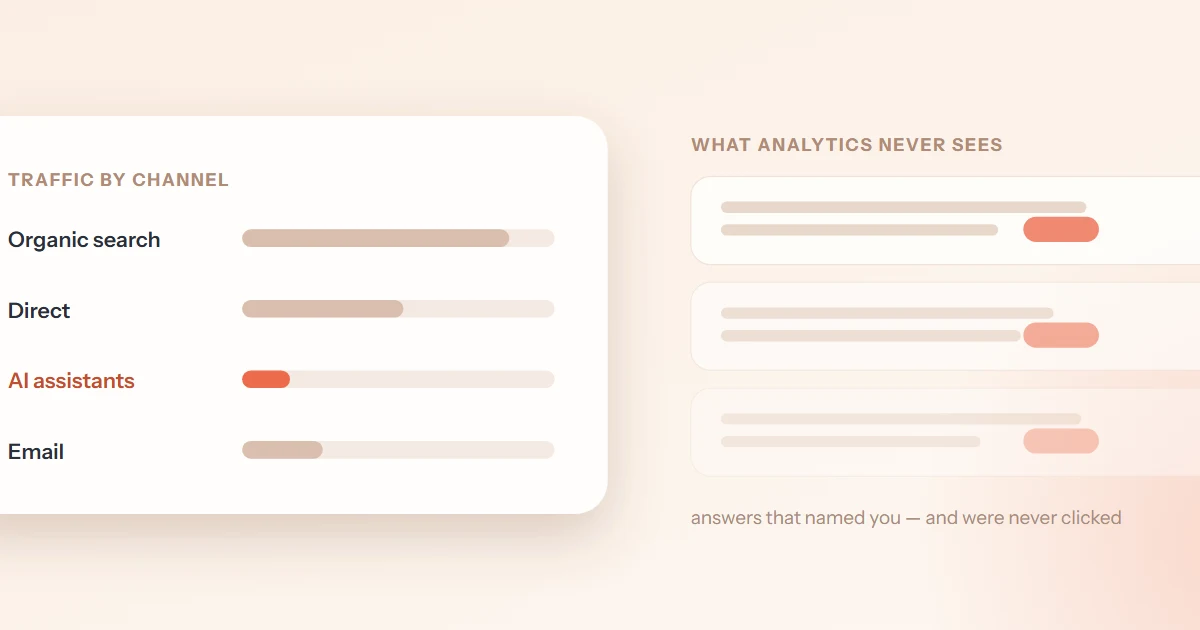
- Referral counts undercount the channel: many buyers act on a recommendation without clicking, and the links inside AI answers get clicked rarely. The influence is bigger than the referrer string.
- The win is real but not magic: engines recommend what they can read, verify and cite — and Vercel is unusually easy to read, verify and cite.
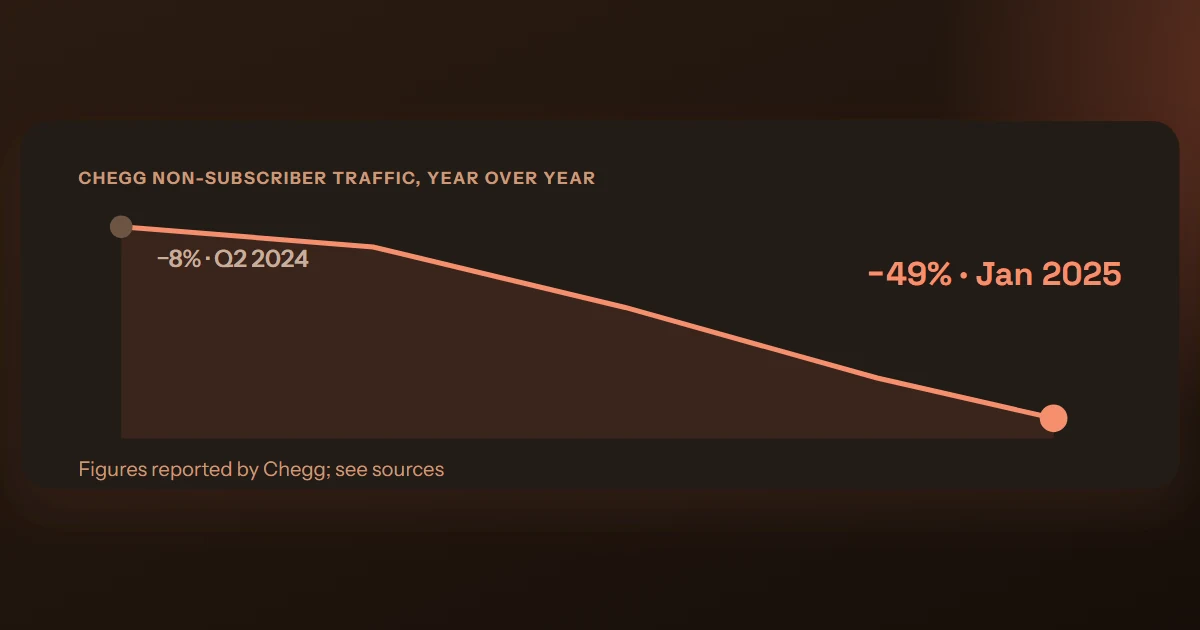
Most AI-visibility wins are vendor anecdotes with unverifiable numbers. The Vercel case is different for one reason: the numbers came from the company's own CEO, in public, with dates — which makes it the reference case for the upside of the same shift that broke Chegg.
The published numbers
- March 6, 2025: "ChatGPT now refers 4.8% of new Vercel signups and it's growing very fast. It was less than 1% 6 months ago." — Guillermo Rauch.1
- April 9, 2025: "ChatGPT now refers 10% of new Vercel signups, which have also accelerated." — a doubling of share in five weeks, on a growing base.2
- Late 2025: subsequent breakdowns of Vercel's AI referral mix reported ChatGPT contributing roughly four-fifths of AI-source referrals, far ahead of Perplexity, Claude and Gemini.3
Note what's being counted: signups, not sessions. This is bottom-of-funnel volume attributed by referrer — the strictest, least flattering way to measure an AI channel, which is what makes the 10% figure remarkable.
The macro data says this isn't a one-off
One company's referrer logs could be an anomaly. The channel-level data says otherwise. Adobe Analytics — measuring aggregated, real commerce traffic rather than surveys — tracked traffic from generative-AI sources to U.S. retail sites up 1,200% in February 2025 versus July 2024, and by July 2025 reported it up 4,700% year over year.4,5
Quality is catching up with quantity. In Adobe's data, AI-referred visitors were 23% less likely to convert than other channels in July 2025 — but that gap was 49% in January, and revenue per AI-referred visit grew 84% over those six months. AI-referred visitors also bounced less than average.5 The channel is young, growing at triple-digit rates, and converging on parity — which is roughly where paid social was a decade ago when smart teams got in early.
Why Vercel — the honest version
Nobody outside the engines can prove why Vercel wins recommendations, and it would be dishonest to sell you a definitive recipe. But the observable ingredients are consistent with everything measured about how engines pick sources:
- The docs answer the actual prompt. "How do I deploy a Next.js app" has a concrete, current, quotable answer on Vercel's own domain — the answer-first structure engines lift near-verbatim.
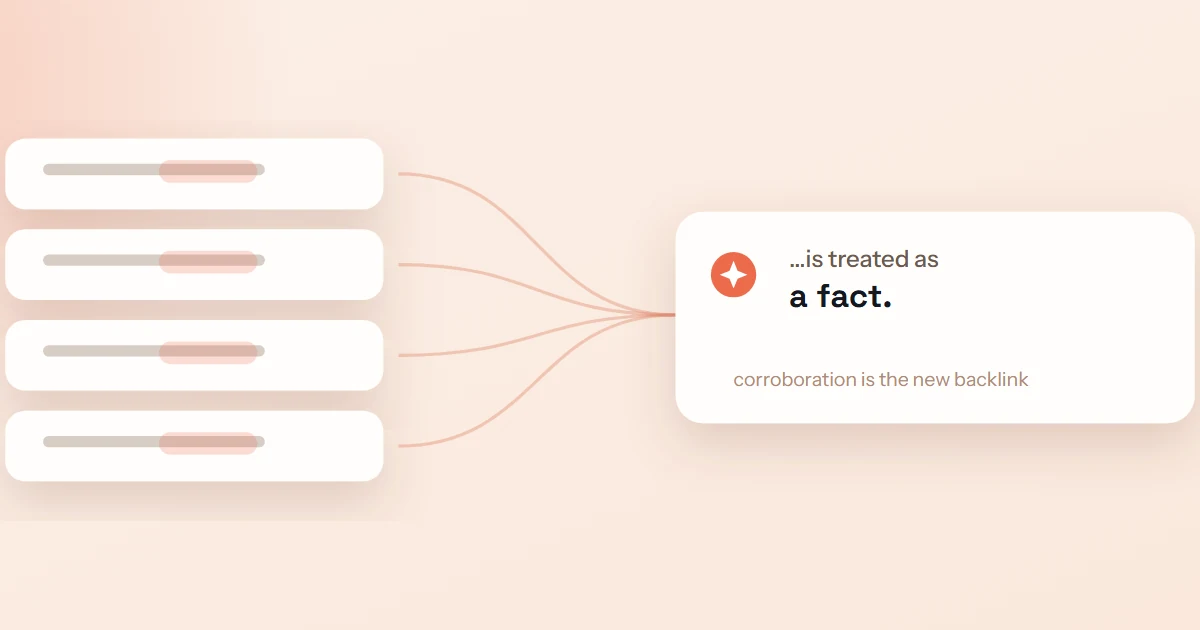
- Entity gravity. Vercel maintains Next.js; millions of tutorials, repos and threads corroborate the association. Engines recommend what the corpus agrees on — third-party corroboration is the multiplier.
- Nothing blocks the readers. Its content is crawlable and current. Trivial-sounding, but a surprising share of brands block AI crawlers on the exact pages they'd want quoted.
None of that is luck, and none of it is a secret. It's the same loop we prescribe: publish the concrete answer, earn the corroboration, keep the readers unblocked — then measure whether it moved.
The measurement lesson: referrals are the tip
Here's the part most coverage misses. Referrer-based numbers like Vercel's — impressive as they are — systematically undercount AI influence, for a measured reason: users rarely click the links inside AI answers (Pew puts source-link clicks at about 1% of visits with an AI summary6). The buyer who acts on a recommendation typically searches the brand by name or types the URL — showing up in analytics as direct or organic, not AI.
| What you can see | Where it shows up | What it misses |
|---|---|---|
| AI referral traffic | Your analytics (referrer strings) | Every buyer who was convinced but didn't click |
| Branded search & direct lift | Search console, analytics | Which engine or answer caused it |
| Mention & recommendation rates | Measured by querying engines directly | Nothing — this is the influence itself, upstream of the click |
That's why the right stack is both: watch AI referral traffic in your analytics for the visible tip, and track mention and recommendation rates per engine — with intervals, so growth like "4.8% → 10%" is distinguishable from noise before you report it — in visibility tracking.
Frequently asked questions
No — it's a documented best case, not a benchmark. Vercel sits in a category developers ask assistants about constantly, with unusually dense public documentation. Treat it as proof the channel can be material, not as a promise of what any brand will see.
Nobody outside the engines can say definitively, and Vercel hasn't published a playbook. The observable ingredients: exhaustive public docs and templates that answer "how do I deploy X" concretely, stewardship of Next.js, and a large corroborating footprint of tutorials and community threads. Engines recommend what they can read, verify and cite.
No — it undercounts it. Many buyers act on an AI recommendation without clicking anything: they search the brand directly or type the URL. Referral numbers like Vercel's are the visible tip; mention and recommendation rates measure the influence underneath it.
Sources
- Guillermo Rauch on X — "ChatGPT now refers 4.8% of new @vercel signups…", March 6, 2025.
- Guillermo Rauch on X — "ChatGPT now refers 10% of new @vercel signups, which have also accelerated", April 9, 2025.
- Secondary analysis of Rauch's shared AI-referral breakdown — AISEOTracker's Vercel case study, late 2025. Directional; the primary signup figures are refs 1–2.
- Adobe — "Traffic to U.S. retail websites from generative AI sources jumps 1,200 percent", March 17, 2025.
- Adobe — "AI traffic surges across industries, retail sees biggest gains", August 2025 — +4,700% YoY (July 2025), conversion-gap and revenue-per-visit figures.
- Pew Research Center — "Google users are less likely to click on links when an AI summary appears in the results", July 22, 2025.

Growth Lead at MentionBeat. Jack writes about the funnel side of GEO — how AI answers change acquisition, what the channel data shows, and how teams turn visibility into pipeline.